Discount Tire
- 3.4
- Rating
- 500.00K
- Installs
- Free
- Price
 Analysis by App-foxy
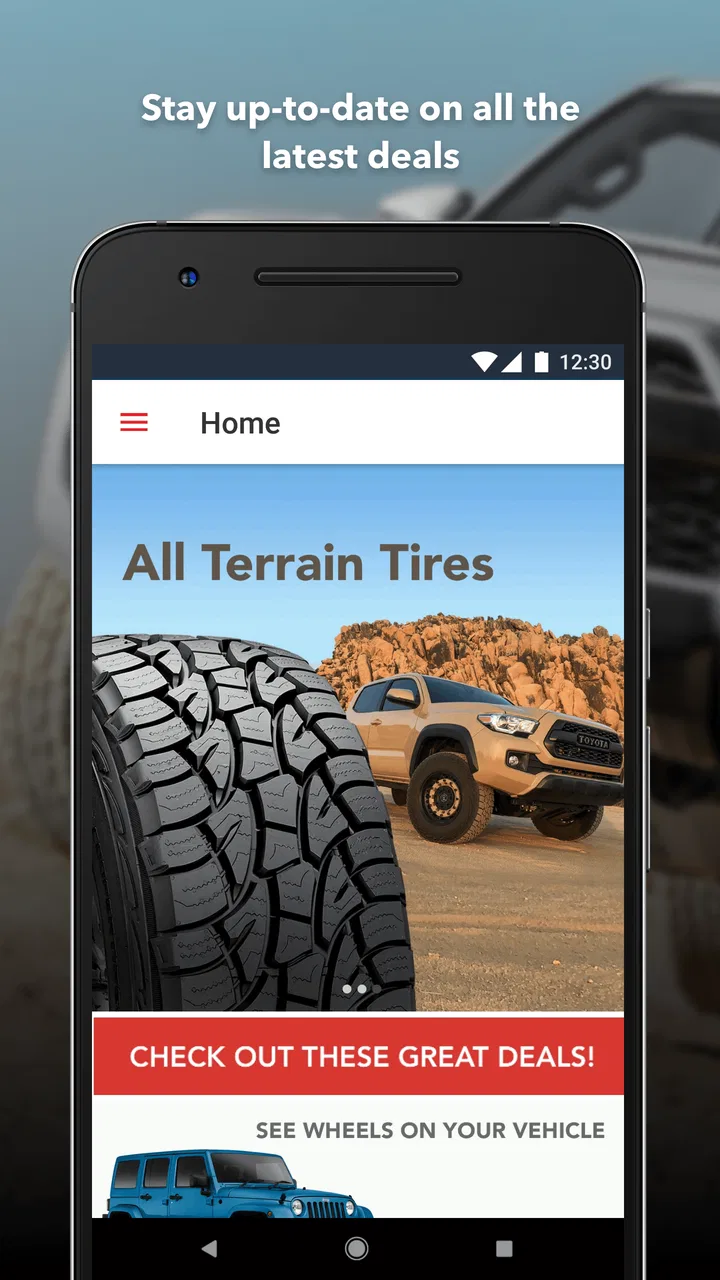
When I need to think about tires, I would rather start with a focused shopping tool than sort through a general marketplace. Discount Tire is built for that specific job: finding tires and wheels, checking fitment, and moving from research toward a purchase or service visit. I found it most useful when I already knew the vehicle involved and wanted to narrow down realistic options without wandering through unrelated automotive products.
This free Auto & Vehicles app comes from Reinalt-Thomas Corporation. It is rated for Everyone, runs on Android versions from 6.0 onward, and has reached more than half a million installs. That audience size makes sense because the app is aimed at ordinary drivers, not only enthusiasts. Its current version is 3.7.17, while the app itself has been available since October 2018.
How I used Discount Tire for a normal tire search
My preferred starting point is to treat the app as a vehicle-first shopping assistant. Instead of opening it with a favorite tire brand already in mind, I begin by identifying the car, truck, or SUV that needs the tires. That approach matters because a tire that looks attractive in isolation may not be suitable for the vehicle, wheel size, driving conditions, or intended use. The app’s main value is helping keep the search connected to the vehicle rather than leaving me to compare a long list of generic products.
You May Also Like

 Google Keep - Notes and lists
Google Keep’s Quiet Growth Shows the Appeal of Simpler Notes
As mobile work gets busier, Google Keep keeps winning a simple contest: capture a thought quickly, find it later, and get on with the day.

 Blood Strike: 2.5 Anniversary
Blood Strike’s Loadouts Turn Every Drop Into a Tactical Gamble
A close look at Blood Strike’s custom loadouts: how fast access to signature weapons reshapes its battle royale rhythm, rewards preparation, and narrows the gap between fights.

 Pandora - Music & Podcasts
Pandora’s Music Is Easy to Start, but Harder to Recover
Pandora’s strength is its low-effort path from a seed to a station. Its weak spot is how much confidence it asks you to place in connection, setup, and quiet recovery.

 8 Ball Pool
 Is Built on Rivalries, Rematches, and Routine
A close look at the rivalries, rematches, shared routines, and unanswered safety questions that turn a quick pool match into a persistent mobile community.

 Samsung Music
’s Quiet Strength Is Playing What You Already Own
Its reach comes less from spectacle than from dependable access to a personal library. That simplicity is both the app’s strongest retention engine and its ceiling.

 AccuWeather: Weather Radar
AccuWeather Review: A Quick, Clear Forecast for Everyday Decisions
For everyday plans, the best forecast is the one you can understand quickly. AccuWeather makes rain timing, radar, and local conditions easy to act on, with a few trade-offs.
More From Our News Desk



Once the vehicle is selected, I look at the available tire and wheel choices with a practical question: what problem am I trying to solve? A commuter may care most about predictable everyday handling and replacement convenience. Someone preparing for winter may need a different kind of search entirely. A driver replacing worn tires before a long trip should also think about scheduling and local availability, not just the product name. The app works better when I use it to organize those decisions rather than expecting it to make the decision for me.
The store summary presents it as a leading selection of tires and wheels, but I judge that selection by how quickly it helps me reach a sensible shortlist. I do not want twenty attractive options with no clear reason to choose one. I compare the tire’s intended use, the vehicle fit, the available size, and whether the choice makes sense for my driving routine. That simple checklist prevents the common mistake of treating the cheapest visible result as automatically best.
For a straightforward replacement, the workflow is easy to understand. I identify the vehicle, browse matching products, inspect the details, and then decide whether I am ready to continue with Discount Tire or whether I need more research. The app is especially convenient when I am away from a desktop computer and want to check options while standing beside the vehicle or discussing a replacement with another driver in the household.
What I check before trusting a result
I pay close attention to the vehicle information I entered. A small mistake in the model, trim, or year can send the rest of the search in the wrong direction. I would not rely on memory if the vehicle has aftermarket wheels or an unusual configuration; I would first confirm the existing tire markings and compare them with what the app shows. The app can make a search more orderly, but it cannot correct incorrect information that I supply.
I also separate “fits the vehicle” from “fits my needs.” Those are not the same thing. A product can be compatible while still being a poor match for frequent highway driving, rough roads, heavy rain, occasional snow, or a driver who values a quieter ride. I use the app to get to the relevant choices, then read the product information carefully instead of assuming that every compatible result offers the same experience.
Another useful habit is taking a screenshot or noting the exact product details before leaving the search. This is not a special feature claim; it is simply a sensible way to preserve a shortlist while comparing options. Tire shopping often involves another person, a service appointment, or a later conversation, and a saved reference reduces the chance of confusing two similar-looking choices.
Settings and account habits worth checking
I would begin by checking location-related choices and vehicle information whenever they are available in the app. Tire availability and service decisions are naturally local, so an outdated location can make the experience less useful. If I change vehicles, I also review the selected vehicle rather than assuming the app has switched automatically. This is one of the most important setup habits because every later recommendation depends on that starting point.
I also review notification preferences instead of accepting every prompt without thinking. A tire-shopping app is not something I need constantly interrupting my day. If reminders or service-related messages are useful to me, I keep only the ones that support an active purchase or maintenance task. If I am merely researching, a quieter setup feels better and keeps the app from becoming background noise.
Privacy and sign-in choices deserve the same practical attention. I use an account when it genuinely makes an ongoing purchase or vehicle workflow easier, but I do not create a profile merely because an app suggests it. For a one-time comparison, browsing may be enough. For repeated tire research or a household with several vehicles, keeping vehicle details organized can justify the extra setup. The right choice depends on whether I expect to return to the same information.
I would not spend much time changing settings before the basic vehicle search works correctly. The best order is to confirm the vehicle, verify the location, adjust notifications, and then explore products. That sequence avoids polishing an account setup while overlooking the detail most likely to affect the results.
Shortcuts that make repeat searches less tiring
The fastest pattern I found is to keep a small record of the vehicle’s current tire size and the reason for replacement. If I am replacing normal wear, I note that. If I am looking for a seasonal change, I record that instead. When I return to the app, I can immediately judge whether the same type of product still makes sense rather than starting with a vague search.
For families, I recommend treating each vehicle as a separate project. Mixing a compact car’s tire search with an SUV’s search is an easy way to lose track of fitment. I would finish one vehicle’s shortlist before opening another. If two people share the decision, I send them the exact product name and size through the communication method we already use, rather than expecting them to reproduce my search from memory.
A second efficient pattern is comparing a small number of serious candidates instead of scrolling indefinitely. I normally ask three questions: does it match the vehicle, does it suit the driving conditions, and can I realistically complete the purchase or service step? Once a tire fails one of those tests, I remove it. This keeps the app’s broad selection from turning into decision fatigue.
The app is also useful as a pre-visit preparation tool. Before contacting or visiting a tire retailer, I can use it to understand what choices are associated with my vehicle. That makes a later conversation more productive because I can explain whether I am seeking a direct replacement, a different wheel appearance, or advice about a specific driving condition. I still welcome professional guidance, but arriving with a defined question is more efficient than arriving with no information at all.
My most practical tip is to separate research from commitment. I browse when I have time, narrow the list, and only then move toward the next step. That prevents rushed decisions made from a phone screen while I am distracted. It also gives me a chance to check the vehicle details again before I finalize anything.
Where the app helps experienced shoppers—and where it stops
Experienced users will appreciate the app more if they use it as a repeatable filter rather than a complete tire expert. Its strength is the connection between a vehicle and a focused tire or wheel search. That is more useful than beginning with a broad web search full of unrelated retailers, generic reviews, and products that may not fit. The app gives the shopping process a clear center.
Its limitation is that a catalog cannot fully understand my road surface, climate, driving style, cargo habits, or tolerance for noise. I still need to interpret the product information and, when necessary, ask a knowledgeable technician. Someone who wants a detailed independent comparison of tread compounds, long-term testing, or specialist performance categories may prefer dedicated automotive publications and owner forums alongside this app.
I also would not use it as a substitute for inspecting the vehicle. Tire condition, alignment, suspension problems, and wheel damage are physical issues. An app can help me research a replacement, but it cannot tell me everything that a hands-on inspection reveals. If the vehicle pulls to one side, vibrates, has uneven wear, or shows visible damage, I would seek service rather than relying on a product search alone.
There is a similar trade-off with wheels. The app can make wheel shopping more approachable, but appearance should come after compatibility. Changes involving wheel dimensions, clearance, or vehicle behavior deserve careful attention. If I am considering a nonstandard setup, I would verify the details with a professional instead of assuming that an appealing result is automatically safe or suitable.
The app’s average rating is 3.5 from roughly one thousand ratings, alongside hundreds of written reviews. I read that as a sign to keep expectations realistic: the concept is useful, but the experience may not feel equally smooth for every shopper or every device. The large install base shows that many drivers find a reason to use it, yet popularity does not remove the need to double-check product details and the final service plan.
Discount Tire compared with the usual alternatives
Compared with a general search engine, Discount Tire feels more purposeful. A normal web search can expose more opinions and retailers, but it also creates more work: I must decide which listings fit, which sources are trustworthy, and which results are actually relevant to my vehicle. This app is better when I want a retailer-centered route from vehicle selection to tire or wheel research.
Compared with a manufacturer’s tire app or website, it is more useful for comparing a range of products in one shopping environment. A manufacturer’s tool may be preferable when I already know the brand I want or need detailed technical material from that manufacturer. Discount Tire makes more sense when I am still choosing among several possibilities and want a practical retail workflow.
Compared with a map app or a phone call, it gives me more room to research before I speak with someone. A call can be faster for an urgent question or a complicated fitment issue, while a map app is better for discovering nearby businesses in general. I see Discount Tire as the middle step: it helps me arrive at a service conversation with a clearer idea of what I need.
Compared with a broad online marketplace, the focused category is its advantage. I am less likely to be distracted by unrelated accessories or sellers when my task is tires and wheels. The trade-off is that shoppers seeking the widest possible cross-retailer price comparison may need another tool. This is not the app I would choose if my only goal were to scan every seller on the internet.
A realistic everyday scenario
Imagine noticing that the front tires on a daily commuter are wearing down before a planned road trip. I would open the app, select the correct vehicle, and confirm the tire information against the sidewall. Then I would narrow the choices according to ordinary highway use, compare the relevant product details, and record the shortlist. If I discover that the vehicle has uneven wear, I would stop treating the task as a simple shopping decision and arrange an inspection as well.
For a household with two vehicles, I would repeat the process separately rather than saving one vague search for both. I would keep the commuter’s needs distinct from the family SUV’s needs, especially if one vehicle carries heavier loads or sees different weather. The app becomes more valuable here because it gives each search a clear vehicle context, but only if I maintain that separation.
If I am not ready to buy, I can still use the app responsibly as a research aid. I would avoid choosing based only on a quick glance, revisit the shortlist later, and confirm that the vehicle details remain correct. That patient workflow is better than treating a tire purchase like an impulse purchase, because the wrong choice can affect safety, comfort, and future service needs.
Who should use it and who should skip it
I recommend Discount Tire to drivers who want a dedicated place to research tires and wheels, especially people who prefer starting from their vehicle rather than from technical tire terminology. It is also a good fit for households that repeat this task across multiple vehicles, shoppers preparing for a service visit, and anyone who wants a more focused alternative to a general web search.
I would suggest looking elsewhere first if you need laboratory-style comparisons, deep enthusiast discussion, or a complete cross-retailer market scan. The app can support that research, but it should not be the only source for a highly specialized decision. I would also skip depending on it alone when the vehicle has unusual modifications or an active mechanical problem that requires inspection.
The fact that it is free removes the main barrier to trying it, and the Everyone rating makes it approachable for a broad household audience. Still, free access does not mean every search will be effortless. The quality of the result depends heavily on accurate vehicle details and on my willingness to read beyond the first appealing option.
My verdict after building a repeatable routine
Discount Tire works best when I use it with a simple routine: identify the vehicle carefully, confirm the location, define the driving need, compare a short list, and verify the physical condition of the car before committing. That routine turns a potentially confusing purchase into a manageable sequence. The app does not replace judgment, but it gives that judgment a more organized starting point.
The strongest reason to keep it installed is its focused vehicle-to-tire workflow. I like that it is more direct than a general marketplace and more flexible than a single-brand research tool. Its weaknesses are equally clear: it cannot perform a physical inspection, it cannot decide which trade-offs matter to my driving, and it may not satisfy shoppers who want exhaustive independent testing or every retailer in one place.
For me, this makes it a useful companion rather than an all-purpose automotive authority. If I were helping a friend replace tires, I would recommend trying Discount Tire as the first organized shopping step, then checking the final choice against the vehicle, the road conditions, and professional advice when needed. That is where the app earns its place: not by eliminating the decision, but by making the important questions easier to ask.
As a free Auto & Vehicles app from Reinalt-Thomas Corporation, it offers enough structure for everyday tire and wheel research without demanding that I be an automotive specialist. I would use it for a normal replacement, a planned service visit, or a household comparison across vehicles. I would pair it with independent research for unusual setups and with hands-on service for mechanical concerns. Used that way, it is a practical tool for drivers who want a clearer path from “I need tires” to a more informed next step.
FAQs for Discount Tire
01What is Discount Tire and how does it work?
Discount Tire is a mobile application designed to help users find and purchase tires and wheels for their vehicles. The app allows users to browse a wide selection of products, compare prices, and read customer reviews. Additionally, it offers appointment scheduling for tire installation at nearby locations, ensuring a smooth and convenient experience.
02Is there a cost to use the Discount Tire app?
No, the Discount Tire app is free to download and use. Users can browse products, schedule appointments, and access various features without any charges. However, purchasing tires or wheels will incur costs, and prices may vary depending on the products and services selected.
03How do I schedule an appointment using the app?
To schedule an appointment through the Discount Tire app, first, browse and select the desired tires or wheels. Once you have made your selection, you can choose a nearby store location for installation. Follow the prompts to select a convenient date and time, and confirm the appointment directly within the app.
04What features does the Discount Tire app offer?
The Discount Tire app offers a range of features including product browsing, customer reviews, price comparisons, and appointment scheduling. Users can also access personalized recommendations based on their vehicle make and model, as well as track their order history and receive notifications about promotions and discounts.
05Is my personal information secure with the Discount Tire app?
Yes, the Discount Tire app prioritizes user privacy and data security. All personal information and payment details are encrypted and stored securely. The app complies with industry standards to protect user data. However, it's always recommended to review the app's privacy policy for detailed information on data handling practices.
Pros
- User-friendly interface for easy navigation.
- Wide selection of tires and wheels available.
- Convenient appointment scheduling feature.
- Regular updates on promotions and discounts.
- Detailed product descriptions and reviews.
Cons
- Limited payment options in the app.
- Some features require a stable internet connection.
- Occasional bugs in the search function.
- Push notifications can be overwhelming.
- Lacks a live chat support option.

Discount Tire
Gallery